[One Family]
Our People
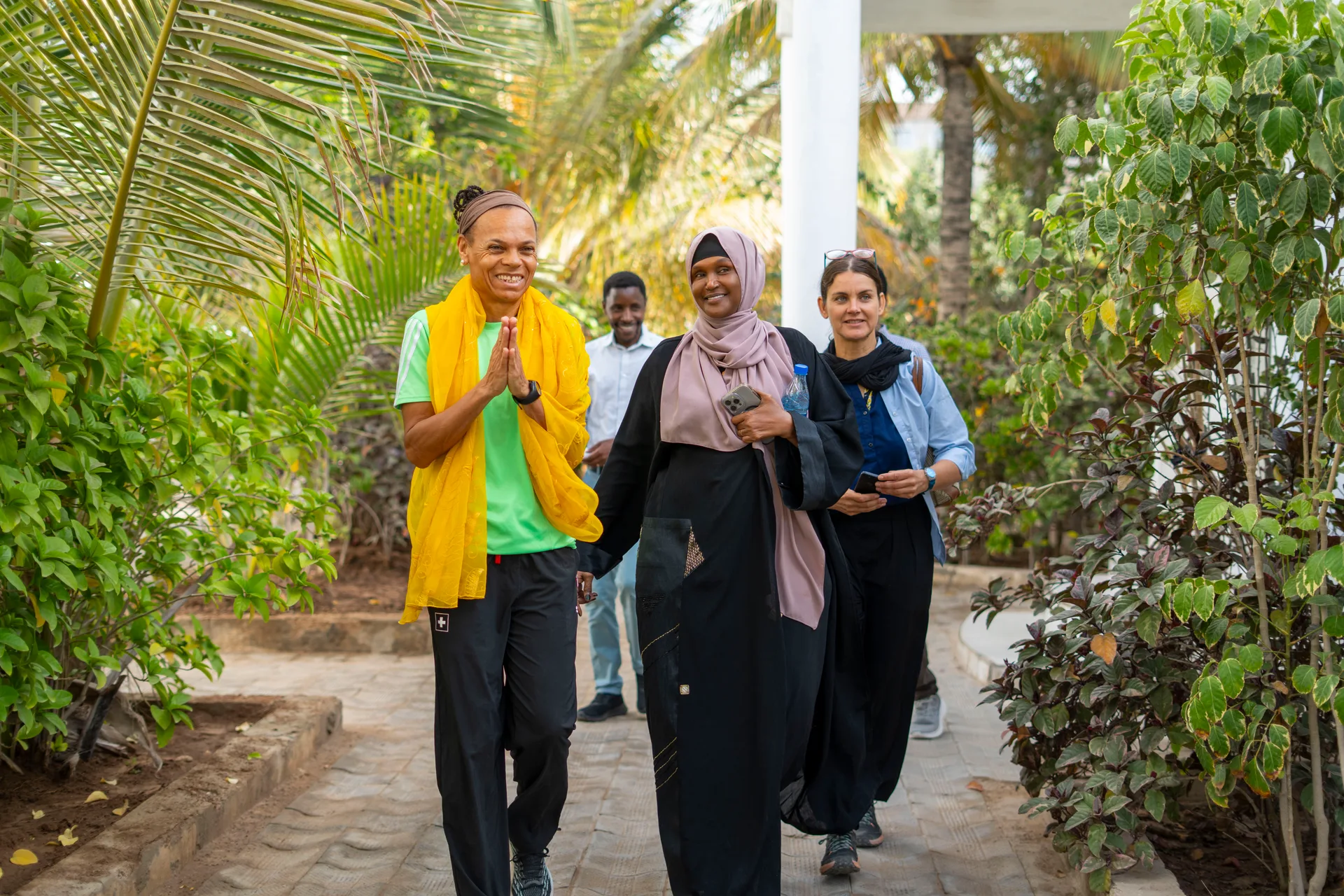
Founded by Elman Ali Ahmed. Carried forward by Fartuun Adan and her daughter Ilwad — a mother-daughter duo who chose peace when the world chose to look away.
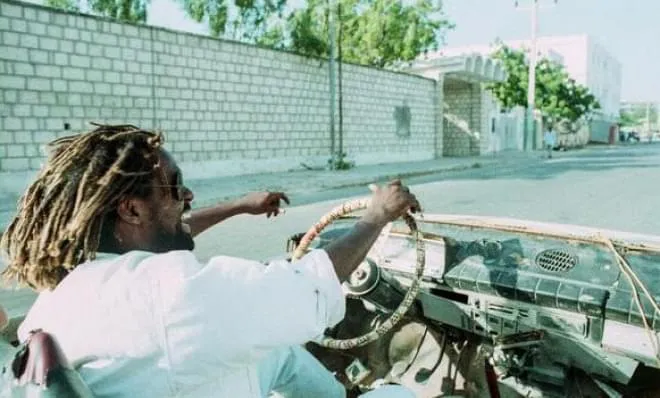
Elman Ali Ahmed
Before Elman Peace was an organisation, it was one man's answer to a war. Elman Ali Ahmed trained as an electronic engineer in Italy and Germany, then came home to Mogadishu in 1988 to build something — he opened Elman Electronics, one of the city's first, and ran a vehicle repair and recovery business alongside it. When the war came, he turned that same instinct for building toward something harder: a technical training institute to rehabilitate young militia fighters.
In the early 1990s that work became Drop the Gun, Pick Up the Pen — offering young men fighting for the warlords a way out: a trade, an education, a reason to believe in a life beyond the front line. In 1992, he founded the Elman Football Club, fielding players from rival districts on the same team in a city where crossing the wrong line could get you killed.
As the war intensified, Elman and his wife, Fartuun Adan, made the hardest decision of their lives: she would take their daughters somewhere safe; he would stay to keep the work going. It was the last time they saw him alive.
On March 9, 1996, Elman Ali Ahmed was shot and killed by unidentified gunmen near the family's home in southern Mogadishu. He was 42. Amnesty International condemned the killing as an execution-style murder carried out “on account of his peaceful opinions and his peace activities.” His death was meant to end the work. It didn't. Drop the Gun, Pick Up the Pen became a national mantra — and the logic underneath it still runs through every reintegration pathway this organisation builds today.
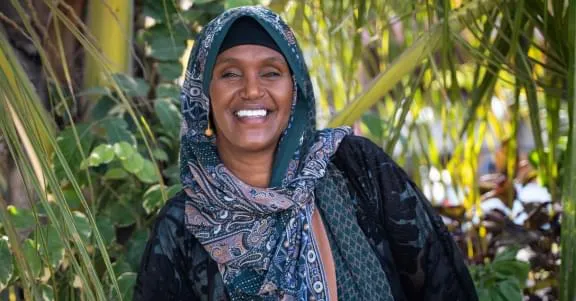
Fartuun Adan
A humanitarian, educator, and organiser, Fartuun returned to Somalia when few others dared — and has carried Somalia's civil society voice into the UN Human Rights reviews ever since.
She has carried this work through two of the deepest losses a mother can face: her husband, Elman, assassinated in 1996, and her eldest daughter, Almas, killed in Mogadishu in 2019. Both times, she chose to keep building.
Under her leadership, Elman Peace has become a leading organisation in Somalia on Peace and Security, Women's Political Participation, and Ending Violence Against Women and Girls. Everything the centre is today — the reintegration model, the crisis centre, the schools, the continental network — was built under her leadership, decade by decade. She didn't inherit an institution. She built one, twice, out of what a war kept trying to take from her.
[ RECOGNITION_LOG ]
- 2013 International Women of Courage Award
- 2015 Gleitsman International Activist Award
- 2020 Aurora Prize for Awakening Humanity
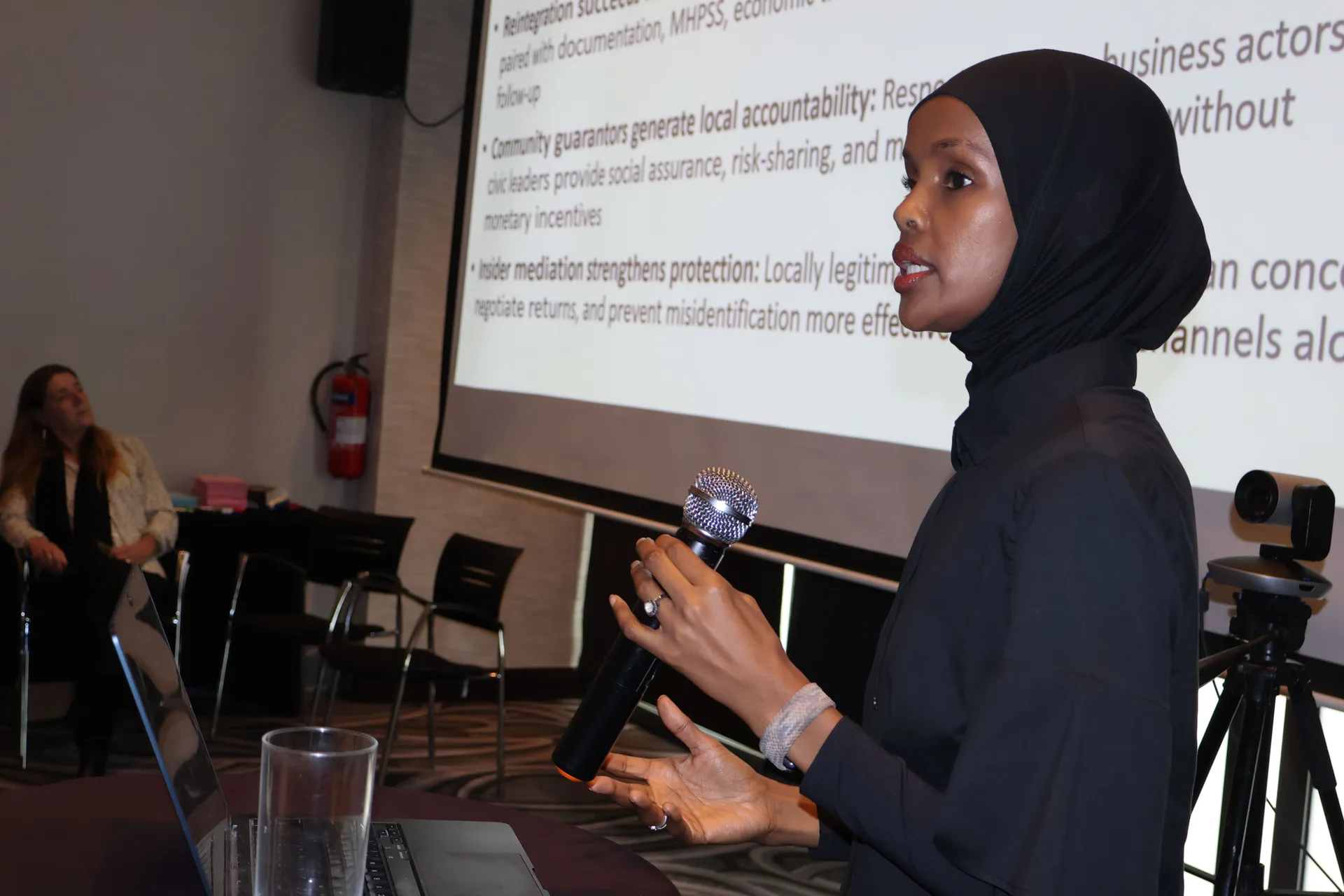
Ilwad Elman
In 2010, while Al-Shabaab still controlled Mogadishu, Ilwad returned from Canada to Somalia. She co-founded Sister Somalia and, in 2015, became the first civil society representative to brief the UN Security Council on the Protection of Civilians.
In 2012 she started the organisation's first girls' basketball programme, after noticing that some of the young women coming through Sister Somalia needed a way to heal that didn't require talking about what had happened to them.
Alongside her mother, she has helped grow the organisation's work into climate, gender justice, human rights, and economic empowerment, while continuing the core work in disarmament, mental health, and youth skills training. She has spent fifteen years building alongside the woman who taught her how. Not instead of her. Alongside her.
[ RECOGNITION_LOG ]
- 2022 Right Livelihood Award
- 2015 UN Security Council Briefing
- 2016 Kofi Annan Foundation — Extremely Together
Their story is the organisation's story.
Walk the journey from 1988 to today — or carry it forward.